The Wobble Is the Point
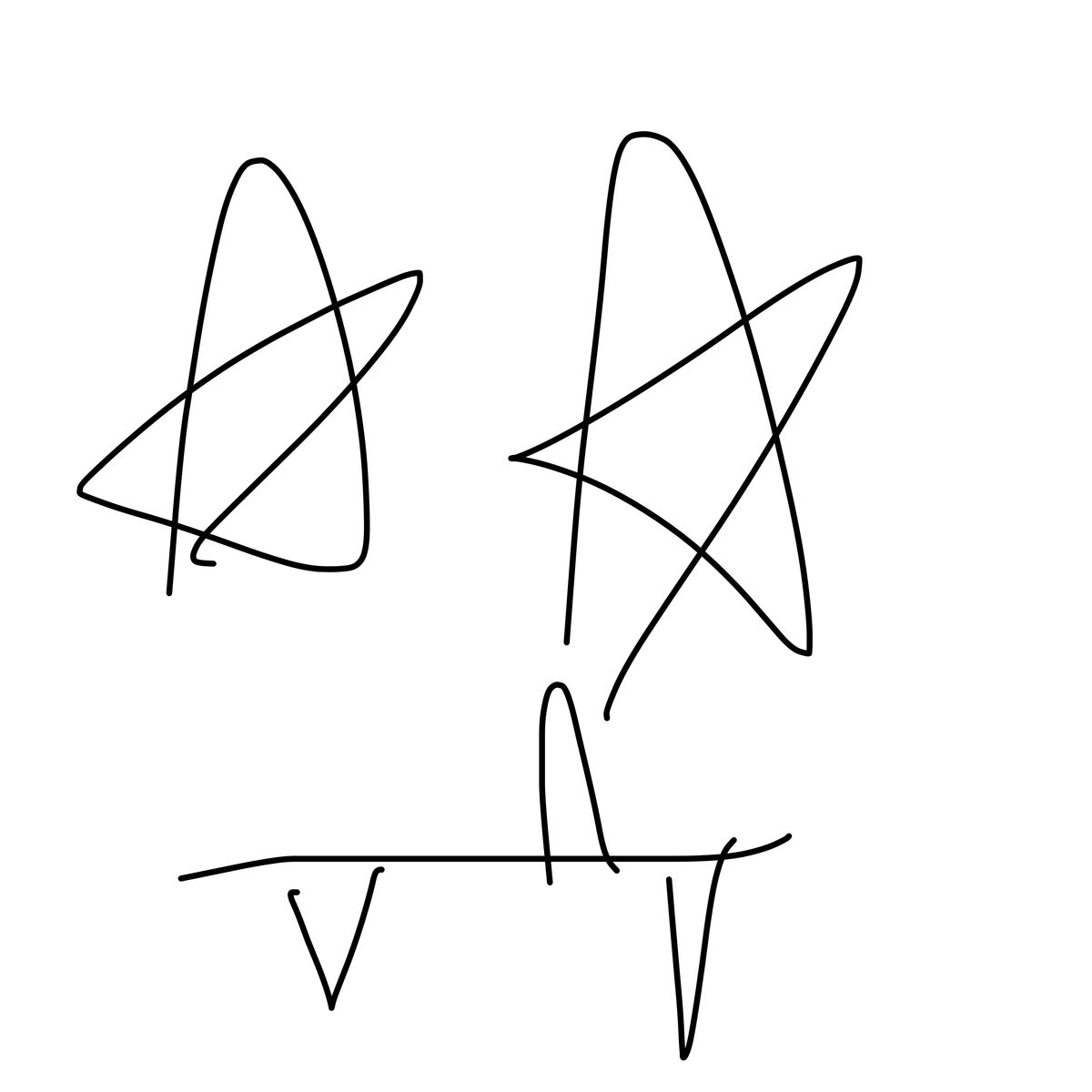
Almost every advance in digital art tooling has been devoted to erasing the evidence that a human made it. Stroke smoothing removes the shake from your line. Shape recognition converts your wobbly circle into a circle. Generative tools now skip the drawing entirely. Each step is sold as clearing an obstacle between you and the image in your head.
The premise is that the wobble is a defect. It is not, and artists worked this out roughly a century before the software industry began sanding it off.
The Argument Isn't New
There is a long tradition of artists deliberately unlearning technical facility, and it produced much of the last century's most durable work.
Klee and Picasso both studied children's drawings, not as a curiosity but as instruction, hunting for what a trained hand had lost. Dubuffet coined art brut in the 1940s, literally raw art, for work made outside the art system by people with no training and no audience, and argued it was more alive than anything in the galleries. The CoBrA painters built a whole movement in the late 1940s on spontaneity and childlike mark-making. Twombly made a career out of what looks, to a hostile eye, like scribbling. Guston abandoned a successful career in refined abstraction to paint crude cartoon figures, was savaged for it, and was vindicated inside a decade.
None of them lacked skill. That is the entire point. They possessed the facility and chose to work around it, because polish was flattening something they wanted to keep.
The consistent finding across all of it: technical control and expressive force are not the same axis, and past a certain point they trade against each other.
What the Wobble Actually Carries
A drawn line records more than a shape. Speed, pressure, hesitation, correction, the moment the hand committed and the moment it was unsure. That is why a two-second sketch can carry more feeling than a rendered illustration. It is a physical trace of a person deciding, in real time, with no undo.
Smoothing removes exactly that information. Not incidental noise around the signal, but a good part of the signal. An eye slightly too big is a decision, or an accident someone chose to keep, and either way it is a fact about a person. A perfectly placed eye is a fact about a tool.
This is not an argument that skill is bad, or that a rendered painting is worse than a scribble. It is an argument that the marks of the hand are content, not error, and that a century of art history arrived first.
Where That Leaves Generated Images
The honest version of the objection: generated images are getting good, plenty of people enjoy making them, and dismissing them as soulless is a lazy move that has aged badly. Photography drew the identical criticism.
Here is the narrower claim we will actually defend. A drawn line is a record of a person's hand moving over time. That is a specific thing, and prompting does not produce it, not because the output is worse, but because it is not the same object. One is a trace of a body making decisions. The other is an image.
If what you value in a drawing is the image, the distinction will not move you. If what you value is the trace, nothing generated will substitute, however good it gets.
We built for the second group. We do not claim it is the only defensible taste.
The Promise
Every drawing on Getadoodle was made by a person with a finger or a stylus. No generative tools, no enhancement, no smoothing between your hand and the line. There is no stroke smoothing, no stabilisation, and no generative tools. The line you draw is the line that posts.
If a drawing looks a bit wrong, it is because a person made it that way and meant it, or did not mean it and kept it anyway.
On Buying One
When you commission a drawing here, you are buying an hour of somebody's attention and a record of their hand. That is the thing being purchased, not an asset with a resale story.
Just Draw Something Bad
The fastest way to test any of this is to draw something badly on purpose and notice it is more interesting than you expected.
Frequently Asked Questions
Is there an art platform with no AI?
Yes, several, Getadoodle among them. Look for platforms that state a policy out loud rather than ones that simply have not added generative tools yet, because the second group has a habit of quietly becoming the first.
What is art brut?
A term coined by Jean Dubuffet in the 1940s, translating as "raw art." It described work made outside the professional art world by people without training, valued for exactly the qualities formal training removes. Closely related to what English-language critics call outsider art.
Why do imperfect drawings feel more expressive?
A drawn line records pressure, speed, and hesitation, physical traces of a person making decisions. Smoothing and correction strip that information out along with the error.
Does using a stylus or drawing tablet count as human-made?
Yes. The distinction is whether a person's hand made the marks, not what they were holding while they did it.
Do I need to be good at drawing?
No, and the whole argument above quietly suggests it may be working against you.