25,000 Doodles Later: What We Saw When Nobody Signed Their Name
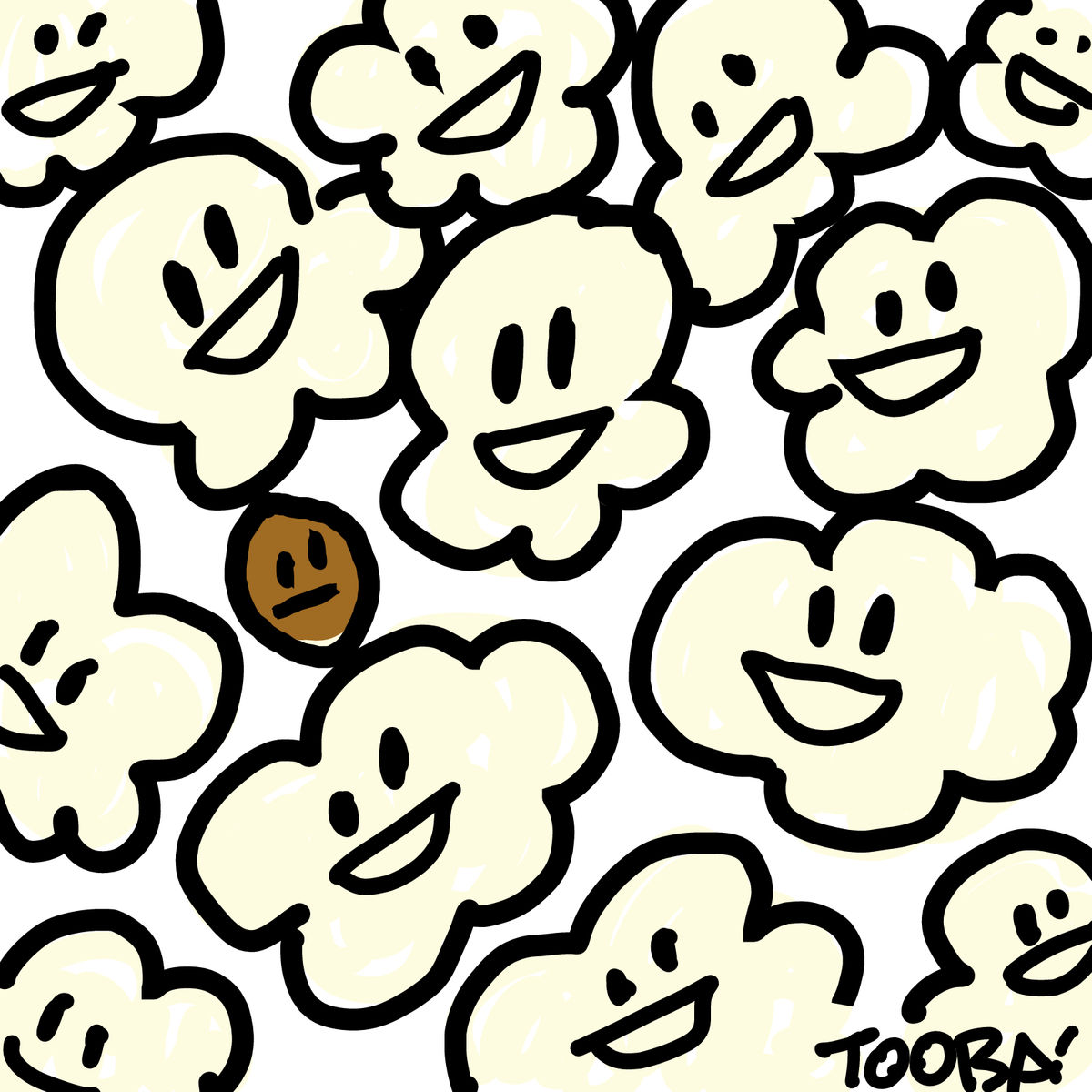
We put a blank canvas inside the Hospital of Emotions installation in Los Angeles. Over the run of the exhibit, 25,000 people drew on it. No usernames. No profile attached. No likes, no shares, nothing to win. Just a stranger, a canvas, and however long they cared to stand there.
Here is what we noticed.
A note on what this is. This is not a study and we will not dress it up as one. No hypothesis, no control group, no trained researcher coding the results. What we have is 25,000 drawings and a great many hours spent looking at them. Everything below is observation, not finding. We think the observations are interesting enough to skip the costume.
1. Nobody Was Trying to Get It Right
The most immediate thing, and the hardest to convey without seeing the archive: almost nothing was corrected.
In digital tools, a large share of drawing time goes into undo. Redraw the line, nudge it, hide the wobble. On the installation canvas there was no undo, so instead of avoiding mistakes, people absorbed them. A slipped line became a strand of hair. An oversized circle became an eye. A stray mark got a face drawn around it.
We cannot tell you why from the drawings alone. But the pattern is consistent enough across 25,000 pieces to say out loud: when a drawing cannot be traced back to you, the incentive to protect your reputation as a drawer disappears, and reputation-protection looks a great deal like what we call perfectionism.
2. The Subject Matter Was Not What Gets Posted
Public feeds skew toward the aesthetic, things composed to be looked at. The anonymous canvas skewed somewhere else entirely.
We are running an image classifier over the full set to turn these impressions into actual proportions, and we will publish the numbers alongside the method and its error rate. Until then, treat the list below as what we noticed, not what we measured.
What recurred, in rough order of frequency:
- Faces, overwhelmingly. Simple, front-facing, a handful of lines.
- Dense, repetitive mark-making. Loops, hatching, spirals filling space.
- Words and short phrases, sometimes in place of a drawing entirely.
- Very simple, deliberately childlike forms. Sun in the corner. Stick figure. Smile.
3. People Drew at Each Other
This was the thing none of us expected, and it is the finding we would defend hardest, because it needs no interpretation at all. You can simply see it.
People responded to each other's drawings. Not occasionally. Constantly.
Someone draws a figure; the next person draws a second figure beside it, facing it. Someone draws a door; someone else draws what is behind it. A visual joke gets a punchline added by a stranger who will never meet the person who set it up. Answers to questions nobody asked aloud.
Nobody instructed anyone to do this. There was no thread, no reply button, no notification telling you your drawing got a response. People did it anyway, because a mark on a shared surface reads as addressed to whoever comes next.
We think this is the most important thing we saw. The connective impulse needed no platform, no follower graph, no algorithm routing the right content to the right person. It needed a shared surface and no reason to perform.
What We're Taking From It
A careful conclusion, because it is the one we can actually support: people will draw, a lot, when the stakes are removed. Twenty-five thousand of them did it standing up, in public, with no tools worth speaking of and nothing to gain.
The obstacle to people making things was never capability. Software has never been more capable. The obstacle is that most places you can draw are also places you can be judged, ranked, and counted, and that turns a two-minute impulse into a referendum on whether you are good enough to act on it.
Remove the judging and the counting and you get 25,000 drawings from people who mostly do not think of themselves as artists.
See Them
The full archive lives on Getadoodle. It is public and free to browse, and we would rather you did not approach it tidy. Do not curate it. Let 25,000 drawings scroll past and blur into each other. That is the point.
Or add one. It takes about a minute, and nobody is counting.
Frequently Asked Questions
Why do people doodle?
There is no single settled answer, and anyone handing you one confidently is overselling. What we can say from 25,000 anonymous drawings is that people do it readily when there is a surface in front of them and no consequence attached, which puts the impulse closer to fidgeting or humming than to art-making.
What was the Hospital of Emotions installation?
An art installation in Los Angeles. We placed a blank canvas inside it and let people draw.
How were the doodles collected?
People drew at the installation, and each drawing was captured and added to the archive.
Can I see all 25,000 drawings?
Yes. The archive is public and free to browse.
Was any of the art AI-generated?
No. Every drawing was made by a person standing in front of the canvas.
Can I use these drawings in my own work?
The archive is free to browse and free to cite. If you want to reproduce drawings in a publication or use them in research, get in touch and we will almost certainly say yes.